What Is a Meme Coin and How Do Traders Actually Make Money on It?
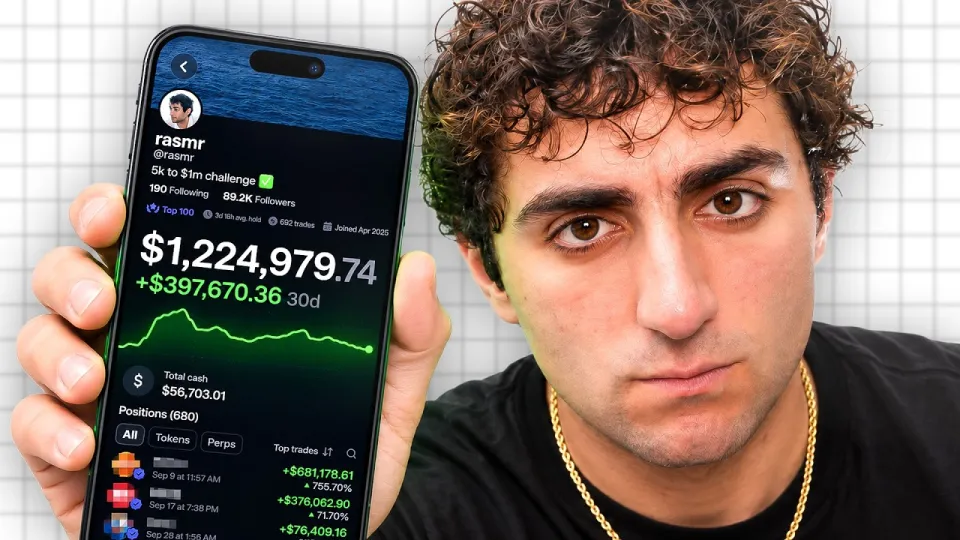
Video: 5 Years of Memecoin Knowledge in 12 Minutes
You can order the same kind of articles for your own video to boost it on YouTube and Google. Just message the Telegram bot @sat_sit_bot. Articles with your video embedded are written and posted by the bot itself — on popular topical sites (no ads). Try it free: 50 articles on us.
· based on the channel rasmr
Key takeaways
- A meme coin is a token whose price rests on narrative, community and attention rather than on revenue or product fundamentals.
- Most of the profit in a launch is made by those who buy early and sell into strength, not by those who hold for a story.
- Typical exit zones sit where early buyers are up multiples and the first wave of profit-taking starts hitting the chart.
- Knowing who released the token and why is part of the trade, not background trivia.
- Emotional decisions — averaging into a loss, round-tripping a 50–100% gain, buying the top out of excitement — are the most common way meme coin traders lose money.
A meme coin is a cryptocurrency whose value comes from attention, narrative and community rather than from revenue, a product or cash flow. Traders make money on it by getting in early on a launch or a narrative, sizing a position they can survive, and selling into the strength that the crowd creates — not by holding for a story. The practical side of this, from launch mechanics to exit rules, is what the rasmr breakdown «5 Years of Memecoin Knowledge in 12 Minutes» is built around; if you want to trade the same venues, registration via the FOMO referral link is where that flow starts.
What separates a meme coin from a regular crypto token
A meme coin has no earnings statement, so its price is a function of how many people are paying attention and how much of the supply is locked up or being sold. Bitcoin and Ethereum are valued on adoption, security and network usage; a meme token is valued on the expectation that someone else will pay more for it later. That does not make every meme coin worthless as a trade — it makes it a trade in attention, where timing and liquidity matter more than the whitepaper.
The mechanics are simple and worth stating plainly:
- A token is launched, usually with a small initial market cap and a thin pool of liquidity.
- An early circle of buyers and insiders accumulates before the public narrative exists.
- The narrative is pushed — a mascot, a cultural reference, a trending topic, a celebrity or event tie-in.
- New buyers arrive because the chart is going up, which pushes the chart further up.
- Early holders sell into that demand, and the chart reflects it.
Everything a meme coin trader does is an attempt to sit somewhere between step 2 and step 5.
Who launches the token and why the narrative matters
Before buying any meme coin, establish who released it and what story it is selling, because the narrative determines who the buyers will be. A token tied to a live cultural moment attracts retail flow quickly; a token with no recognisable story depends entirely on paid promotion and manufactured hype. The question «what is the narrative» is not small talk — it tells you the size of the audience the coin can reach and how long the attention window is likely to stay open.
Practical checks before entering:
- Origin: who deployed the contract, and is the same wallet behind earlier launches.
- Narrative fit: is the story tied to something people are already searching for, or is it invented from nothing.
- Supply control: how much of the float sits with a small number of wallets.
- Liquidity depth: how much can be sold before the price collapses on the way out.
- Promotion pattern: organic community chatter versus paid shilling from accounts that will dump into their own followers.
A coin with a strong story and concentrated supply is a fast trade, not an investment. A coin with a weak story and concentrated supply is a donation.
Where meme coin traders usually take profit
Most of the money in a meme coin launch is made by selling into strength, and the reliable signal for when that happens is market capitalisation rather than a fixed price target. Early buyers are typically up multiples well before the crowd arrives, and the first wave of their selling is what turns a vertical chart into a retrace. Watching at what market cap a token historically starts to stall — and who is holding at that level — gives a far better exit plan than hoping for one more leg up.
A workable exit framework:
- Decide before entry what percentage of the position you sell at each market cap milestone.
- Scale out on the way up instead of trying to catch the exact top.
- Keep a hard rule for the remainder, so a winner cannot turn into a loss.
- Accept that after you sell, the price may keep rising — that is the cost of taking profit, not a mistake.
Holding a large unrealised gain and refusing to sell is one of the most common regrets in this market, and it is entirely a discipline problem rather than an analysis problem.
The emotional mistakes that cost meme coin traders the most
Emotion, not information, is where most meme coin losses come from, and the pattern repeats in almost identical form for new traders. The most frequent version is buying a position, watching it fall, and holding on because the chart «has to come back» — turning a small planned loss into a large unplanned one. The mirror image is taking a 50–100% gain, getting greedy, and round-tripping the whole move back to entry because the chart looked like it would continue.
Other repeat offenders:
- Buying the top out of excitement after seeing a green candle, with no plan for what happens if it reverses.
- Adding to a losing position to «average down» on a token with no fundamentals to average into.
- Sizing positions so large that a normal drawdown forces a panic decision.
- Treating a community rumour about an inner circle of early buyers as a reason to hold longer instead of a reason to watch the exits.
Starting small is not a lack of ambition; it is how you survive long enough to learn the rhythm of launches, the market caps where selling begins, and your own reactions to a fast chart.
Common questions traders ask before their first meme coin trade
Most beginner questions about meme coins come down to risk control rather than token selection. Traders want to know how much capital to commit, how to spot a launch that is likely to rug, and whether a coin tied to a big upcoming cultural event is a good buy. The honest answers are unglamorous: size small, study who holds the supply, and treat every narrative coin as a trade with an exit rather than a position to marry.
A second cluster of questions is about other people's profits — how early buyers got in before the public announcement, and whether that is replicable. In most cases it is not: early access comes from being inside the launch circle, and a trader outside it can only respond to the chart and the flow that follows. What is replicable is the discipline of scaling out, keeping a stop, and not letting a good trade become a bad one through hope.
Useful links
- FOMO registration via the rasmr referral link — the trading venue promoted with the video.
- Catalyst trading group on Discord — the community chat referenced alongside the breakdown.
Bottom line
A meme coin is a bet on attention, and the traders who last treat it that way: they check the narrative and the supply before entering, they scale out as market cap rises, and they never let an emotion make a decision the plan already covered. The rasmr video condenses five years of that experience into twelve minutes, and its core message is that process beats prediction in a market this fast. Start with capital you can lose, write your exit levels down before you buy, and judge yourself on execution rather than on one lucky candle. If you want to put the framework to work, sign up through the FOMO link and keep position sizes small while you learn the rhythm.
Questions & answers
How much money do I need to start trading meme coins?
You can start with a small amount, and starting small is the recommended approach while you learn how launches behave. The point of a small position is that a total loss does not change your situation, so you can study market caps, exit points and your own reactions without pressure. Increase size only after your process has survived several trades.
How can I tell if a meme coin is going to rug?
There is no certain signal, but concentration of supply in a few wallets, thin liquidity, an anonymous team with a history of similar launches and promotion from accounts that sell into their own followers are all red flags. Check who deployed the contract and how much of the float early wallets hold before you buy. If the exit liquidity is smaller than your position, the trade is already too big.
Why do early buyers sell so soon after a launch?
Early buyers are usually up multiples before the public narrative even forms, so their selling is what creates the first real retrace. Watching at which market cap a token starts to stall tells you where that pressure tends to appear. Planning your own scale-out around those levels is more reliable than expecting one more leg up.
Is a meme coin tied to a big event or game release a good investment?
A recognisable narrative can attract attention quickly, which makes it a tradable story, but attention windows close and the token still has no cash flow behind it. Treat it as a trade with predefined exits rather than a long-term holding. The quality of the story affects how many buyers arrive, not whether you should sell into strength.
Source: 5 Years of Memecoin Knowledge in 12 Minutes · Markdown version